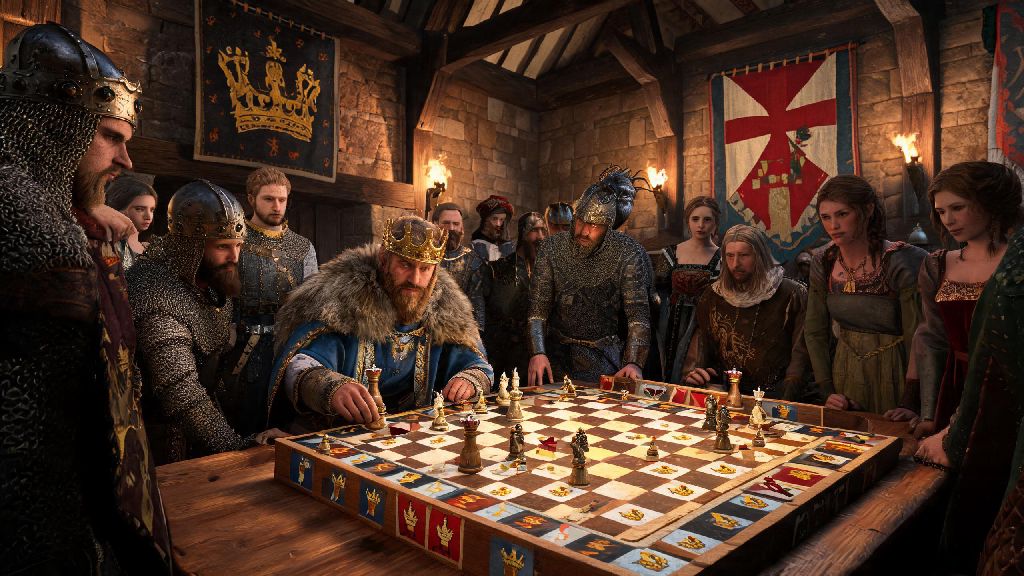
Most casual mobile game players know Ludo King as the go-to pick for quick, fun matches with friends and family across the globe. But far fewer know that the game’s earliest predecessor, lud, has deep, well-documented ties to centuries of British royal history. If you’ve ever wondered why is lud important in history of kings of britain, you’ll be surprised to learn it was far more than just a pastime for royal households. It shaped diplomatic meetings, trained future rulers, and even created long-standing traditions that still show up in modern Ludo King rules today.
Core Reasons Why Is Lud Important in History of Kings of Britain
Lud first arrived in Britain with Roman settlers in the 1st century CE, and it quickly caught on with elite ruling classes long before the unified British monarchy was formed. By the 9th century, it was a staple in royal courts across the Anglo-Saxon kingdoms, serving three key purposes that secured its place in royal history:
Unlike many other games from that era, lud was accessible to people of all ages and skill levels, so it could be played by everyone from young royal children to elderly council members. That versatility made it a unifying force in even the most divided royal courts.
How Lud Evolved Across Royal Dynasties
As British monarchies changed and grew, so did the rules and traditions around lud. During the Tudor era, King Henry VIII was known to play lud with his privy council members to test their loyalty and decision-making skills under pressure. He would intentionally make risky moves to see who would challenge his choices, and he often promoted advisors who played fair and thought strategically during matches. Queen Elizabeth I kept a custom ivory lud set in her private chambers, and she would often play with her ladies in waiting when she needed a break from running the country.
By the Stuart era, lud had become so embedded in court life that servants were required to keep a set on hand at all times for impromptu games. Royal players would often tweak rules to make matches more dynamic, adding extra challenges or reward rolls to keep things interesting. This love of mixing familiar game mechanics with new twists is still common among casual strategy game fans today. Many players who enjoy turn-based games that balance luck and tactical choice also try out titles that test similar skills, like 334 Rummy, to keep their decision-making sharp between longer Ludo King tournament matches.
When the Hanoverian dynasty took the throne in the 18th century, lud spread beyond royal courts to upper class households across the country, but it still retained its royal associations. King George III was known to play lud with his children every Sunday after church, a tradition that many wealthy families copied to feel closer to the monarchy. Custom hand-carved lud sets became a popular status symbol for wealthy families during this era, with many sets passed down as family heirlooms for generations.
Royal Lud Traditions That Shaped Modern Ludo King
Many of the core rules and rituals we associate with Ludo King today come directly from those centuries of royal lud play. For example, the widely followed rule that you need to roll a six to move a piece out of your starting yard was first introduced by King Charles II in the 17th century. He declared that only a “roll fit for a king” could start a match, and the rule stuck around even as the game spread to the general public. This standardization is a big part of why is lud important in history of kings of britain, as it created a consistent rule set that spread beyond royal courts to the general public.
The four-player format that is the default for most Ludo King matches also comes from royal tradition. Queen Victoria loved playing lud with her husband Albert and their two eldest children, so she formalized the four-player rule as the official standard for the game in the mid-19th century. Before that, matches could have anywhere from two to six players, but the four-player format quickly became the most popular after the queen’s endorsement.
Even small, unwritten rituals have their roots in royal lud play. The common habit of tapping the dice before rolling comes from a medieval royal superstition that tapping the dice would ward off bad luck that could make you lose a high-stakes match. Kings would often tap their dice three times before rolling to honor the Holy Trinity, and the tradition stuck around even as the game became more secular. Core Ludo King rules that players follow without a second thought today have been shaped by hundreds of years of royal tradition, which is a big part of what makes the game feel so timeless.
Why This Royal History Matters For Modern Ludo Players
You might be wondering why you should care about the royal history of lud when you’re just opening Ludo King for a quick 10-minute match with your cousin. But this history means that every time you play a game of Ludo King, you’re participating in a cross-century shared gaming tradition that has been enjoyed by kings, queens, and regular people alike for over 2,000 years. It’s not just a random mobile game – it’s a living piece of history that has evolved with the people who play it.
This history also explains why Ludo King feels so familiar to players all across the UK, even if they’ve never picked up a physical ludo board before. The rules and rituals have been passed down through generations, from royal courts to working class households, so many people grow up with an innate understanding of how the game works. It’s a shared cultural touchpoint that transcends age, class, and geographic location, which is part of why it’s remained so popular for so long.
For players who love competing in Ludo King tournaments, this history also adds an extra layer of fun to every match. You’re not just playing for a win – you’re carrying on a tradition of competitive play that dates back to kings settling land disputes over a lud board. It makes every lucky six roll, every well-timed piece capture, feel like a small part of a much bigger story.
Next time you open Ludo King for a quick match with friends or family, take a second to appreciate the long, rich history behind the game on your screen. That’s why is lud important in history of kings of britain – it’s not just a forgotten old royal pastime, it’s a living link between medieval royal courts and modern casual gaming culture, connecting players across thousands of years of shared fun.