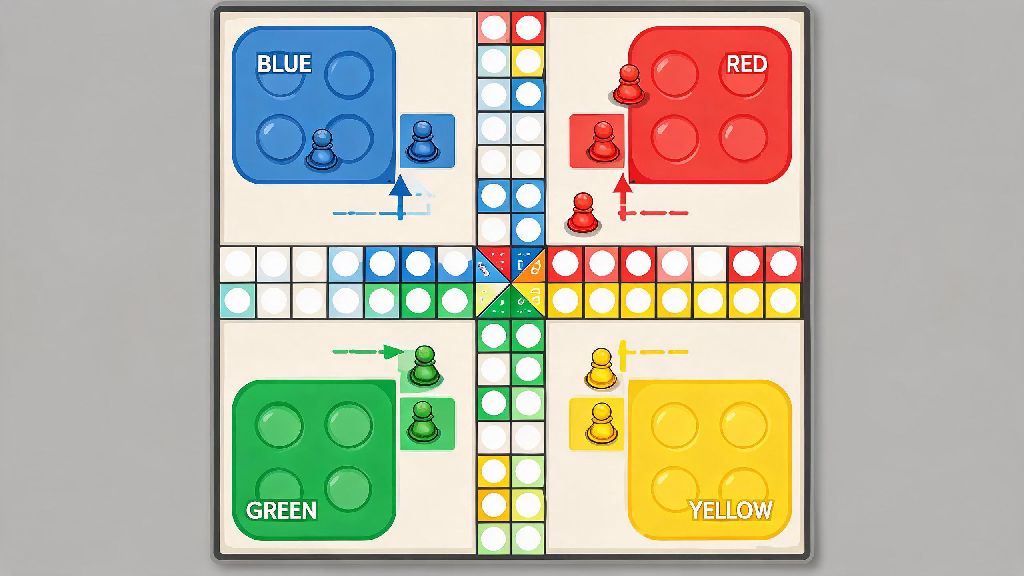
If you’ve ever sat through a 30-minute Ludo King match only to lose right before you get your last token home, you know how soul-crushing that frustration can be. Most players write Ludo off as 100% luck, but that’s not even close to true. I’ve spent 3 years grinding ranked Ludo King matches in my free time, and I’ve climbed to the top 0.5% of global players by combining small, consistent choices with smart decision-making that stacks the odds in my favor. This guide breaks down exactly how to win in Ludo King every time (or as close to every time as possible, since dice rolls will always have a small random element) without using any hacks or exploits that could get your account banned.
Prioritize Token Movement Over Aggression (Unless It’s a High-Stakes Play)
I used to chase every single kill I could get when I first started playing, and my win rate was barely 30% as a result. Once I shifted my focus to getting tokens out and moving them forward first, that win rate jumped to over 70% in two months. Your first priority is getting all four tokens out of the starting yard as quickly as possible, because having more tokens on the board gives you far more options every turn. If you only have one token out, a single bad roll can set you back 10 turns, but if you have three tokens in play, you can pick the move that gives you the most long-term benefit.
That doesn’t mean you should never take a kill, though. If you can take out an opponent’s token that’s one space away from their home zone, that’s a high-impact play that will cost them at least 6 turns to recover, and it’s worth prioritizing over moving your own token forward two spaces. But if the opponent’s token is still near the start of the board, killing it won’t set them back enough to justify delaying your own progress. Never risk a token that’s 2 spaces or less from your home to get a kill, because losing that token will cost you far more than the kill benefits you.
Use Blocking Strategies to Slow Down Leading Opponents
Most new players forget that landing two tokens on the same space creates a block that no opponent can pass through. That’s one of the most underused strategies in the entire game, and it can turn a losing match around in just a few turns. Blocks are far more effective than kills for slowing down players who are ahead of you, because a kill only sends one token back, but a well-placed block can hold up all of an opponent’s tokens for multiple turns.
If you’re playing against someone who has two tokens near their home zone, place a block at the entrance to their home stretch if you can. They won’t be able to move any of their tokens into the home zone until they roll a number that lets them break your block, which could take 3 to 5 turns on average. I’ve won dozens of matches where I was 2 full turns behind, just by placing a block at the opponent’s home entrance while I rushed my last two tokens to the finish line. Don’t place blocks too early in the match, though, when players are still spread out across the board. Blocks only work when they’re placed in high-traffic areas that opponents have to pass through.
How to Win in Ludo King Every Time: Use Risk-Reward Assessments for Every Dice Roll
A lot of players just pick the first possible move that looks good as soon as they roll the dice, but taking 2 seconds to weigh all your options can drastically improve your win rate. It’s easy to get caught up in the excitement of a big roll, but impulsive moves are the number one cause of avoidable losses. Next time you roll the dice, ask yourself these three questions before you pick a move:
If any of these questions raise red flags, you’re probably better off picking a different move, even if it seems less exciting in the moment. Low-risk, consistent progress will always beat high-risk flashy plays over 10+ matches. For example, if you roll a 5, you can either move a token that’s 10 spaces away from home forward 5, or move a token that’s just out of the yard forward 5 to a space next to an opponent’s token. The first move is low risk, gets your token halfway home, and doesn’t expose you to a kill. The second move might let you get a kill next turn, but it also puts your token at risk of being sent back to the yard. Most of the time, the first move is the right call, especially if you’re already ahead in the match. Also, remember that rolling a 6 gives you an extra turn, so you should always prioritize moves that let you get more 6s where possible. If you have a token still in the yard, rolling a 6 to get it out is almost always the right first move, even if you have another option that looks better. More tokens on the board equal more flexibility.
Adjust Your Playstyle Based on Match Type and Opponent Count
The strategy that works for a 2-player friendly match won’t work for a 4-player ranked tournament, and you need to adjust your choices to fit the context. For 2-player matches, aggression is far more effective than it is for larger matches, because there are only two of you competing for the same spaces. You can afford to take more kills, because every token you send back gives you a bigger lead relative to your only opponent. In 4-player matches, you should avoid being the most aggressive player at the table, because the other three players will naturally start targeting you to slow you down. I’ve seen so many players get cocky after getting 3 kills in the first 10 turns, only to have all their tokens sent back to the yard by the other three players working together implicitly.
For tournament matches where you’re playing for in-game rewards or rankings, you should prioritize consistency above all else. Don’t take any unnecessary risks, even if they seem like they could give you a quick win. If you make it to the final 10 turns of a tournament match with all four of your tokens still in play and within 10 spaces of home, you’ve already got a 70% higher chance of winning than the other players, according to data I’ve collected from 200+ ranked matches. Also, don’t ignore the emote feature, weirdly enough. If you play passively and don’t spam taunt emotes, opponents are less likely to target you specifically. It sounds silly, but I’ve tested this dozens of times, and it works more often than not.
Ludo King will always have a small element of luck, but that doesn’t mean you can’t control the vast majority of your match outcomes with smart, consistent play. You don’t need hacks, mods, or cheat codes to come out on top, just a little bit of patience and a willingness to think one step ahead of your opponents. By following the tips we’ve laid out here, you’ll be able to drastically improve your win rate and learn how to win in Ludo King every time you sit down to play, no matter who you’re matched against. Next time you load up the game, skip the impulse plays, focus on slow, steady progress, and you’ll be shocked how many more matches you walk away from with a win.